HIFU vs RF Body Tightening in Korea: What’s the Difference?
Non-surgical body tightening has become increasingly popular in Korea, especially for people who want firmer skin without surgery or long downtime. Among the most commonly used technologies are HIFU (High-Intensity Focused Ultrasound) and RF (Radiofrequency).
While both aim to improve body skin laxity, they work in different ways and are suited to different skin conditions. Understanding these differences can help set realistic expectations before treatment.
What Is HIFU Body Tightening?
HIFU body tightening uses focused ultrasound energy to deliver heat deep into the skin layers. This controlled energy stimulates collagen remodeling in deeper tissues, leading to gradual tightening over time.
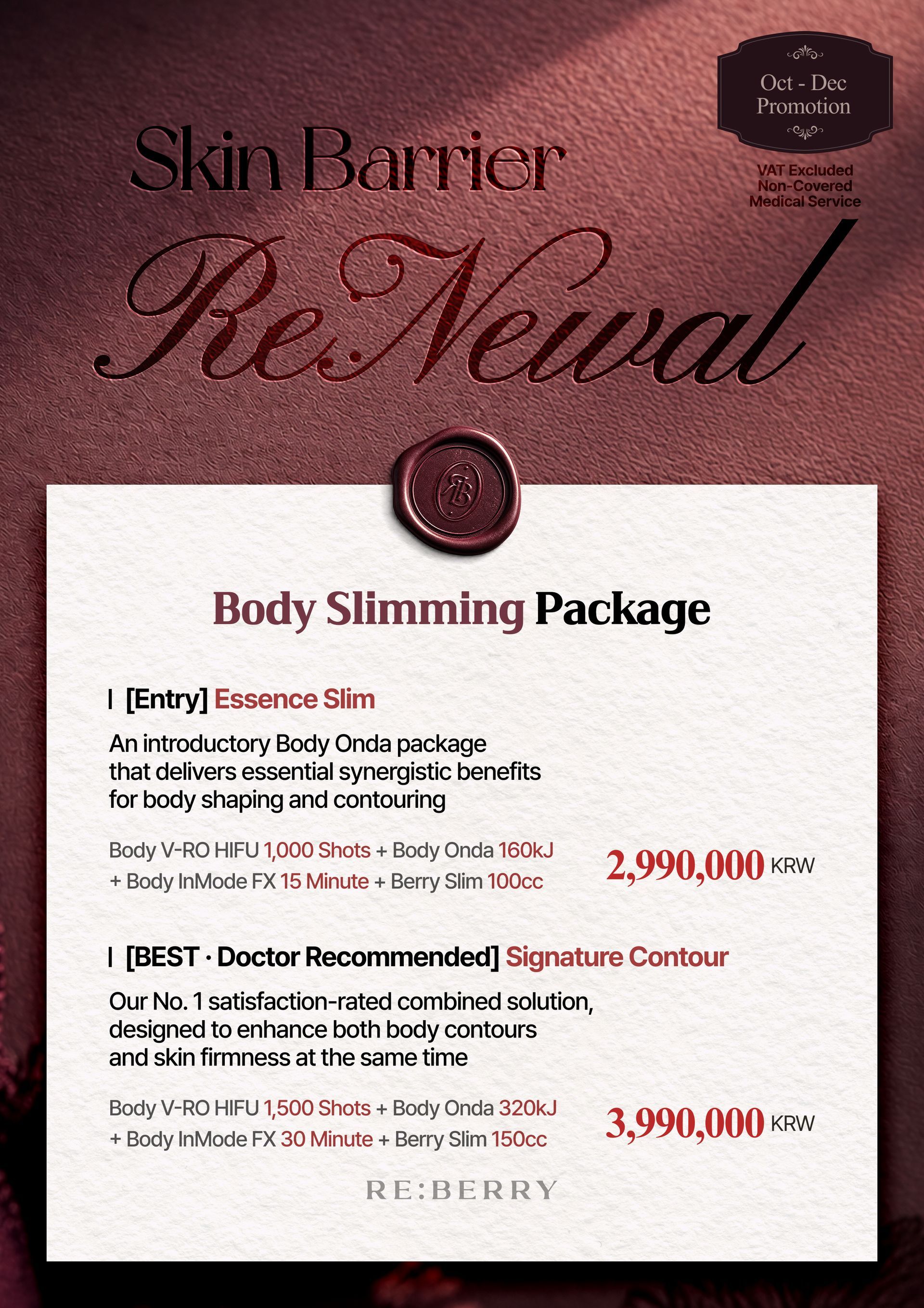
In Korea, HIFU is commonly used for body areas where deeper skin laxity is present, such as the abdomen, upper arms, thighs, or knees.
HIFU body tightening is generally chosen by individuals who want a more structural tightening effect rather than surface-level firming.
What Is RF Body Tightening?
RF body tightening uses radiofrequency energy to heat the dermis and surrounding tissue more broadly. This heat encourages collagen contraction and improves overall skin texture and firmness.
RF is often selected for mild to moderate skin laxity, especially when the goal is smoother skin and improved elasticity rather than deep lifting.
In Korea, RF body tightening is commonly used for early signs of looseness or as a maintenance treatment.
How HIFU and RF Differ in Practice
The key difference between HIFU and RF lies in how deeply the energy penetrates and how concentrated it is.
HIFU delivers energy in a focused manner, reaching deeper layers of the skin. Because of this, it is often used when more noticeable tightening is desired. Sensations during treatment can feel deeper or more intense, depending on the area.
RF delivers heat more evenly across the skin layers. Treatments are usually described as more comfortable, with a warming sensation rather than sharp pulses. RF focuses on improving skin quality and firmness over a wider area.
Which Areas Are Better for HIFU vs RF?
HIFU is commonly chosen for areas with thicker skin or more noticeable laxity, such as the abdomen, upper arms, inner thighs, and knee area.
RF is often preferred for areas where skin texture and elasticity are the main concern, such as mild looseness on the abdomen, arms, or back, or for maintaining results after other treatments.
In some cases, both technologies are used in combination for a more balanced result.
Results and Timeline
With both HIFU and RF, results are gradual, not immediate.
HIFU results typically begin to appear within several weeks, with continued improvement over two to three months as collagen remodeling progresses.
RF results may start to appear slightly earlier in terms of skin firmness and smoothness, with continued improvement over time.
Neither treatment is intended for weight loss or significant fat removal. Both focus on skin tightening and contour refinement.
Downtime and Recovery
One reason HIFU and RF body tightening are popular in Korea is the minimal downtime.
Most people return to normal activities on the same day. Temporary redness, warmth, or mild soreness may occur, but these effects usually resolve quickly.
How to Choose Between HIFU and RF in Korea
HIFU may be more suitable if deeper tightening is needed or if skin laxity is more pronounced.
RF may be a better option if skin looseness is mild and the goal is smoother, firmer skin with a gentler treatment experience.
A professional consultation is important, as skin thickness, body area, and personal goals all affect which technology is more appropriate.
Why Korea Is Known for Non-Surgical Body Tightening
Korea is known for its wide availability of advanced aesthetic technologies and structured treatment planning. Clinics often customize HIFU, RF, or combination approaches based on individual needs rather than using a one-size-fits-all method.
This tailored approach helps patients achieve more natural-looking results with non-surgical methods.
Final Thoughts
Both HIFU and RF body tightening play important roles in non-surgical body contouring in Korea. They are not competing treatments, but complementary tools that address different aspects of skin laxity.
Understanding how each works helps set realistic expectations and supports better decision-making before treatment.