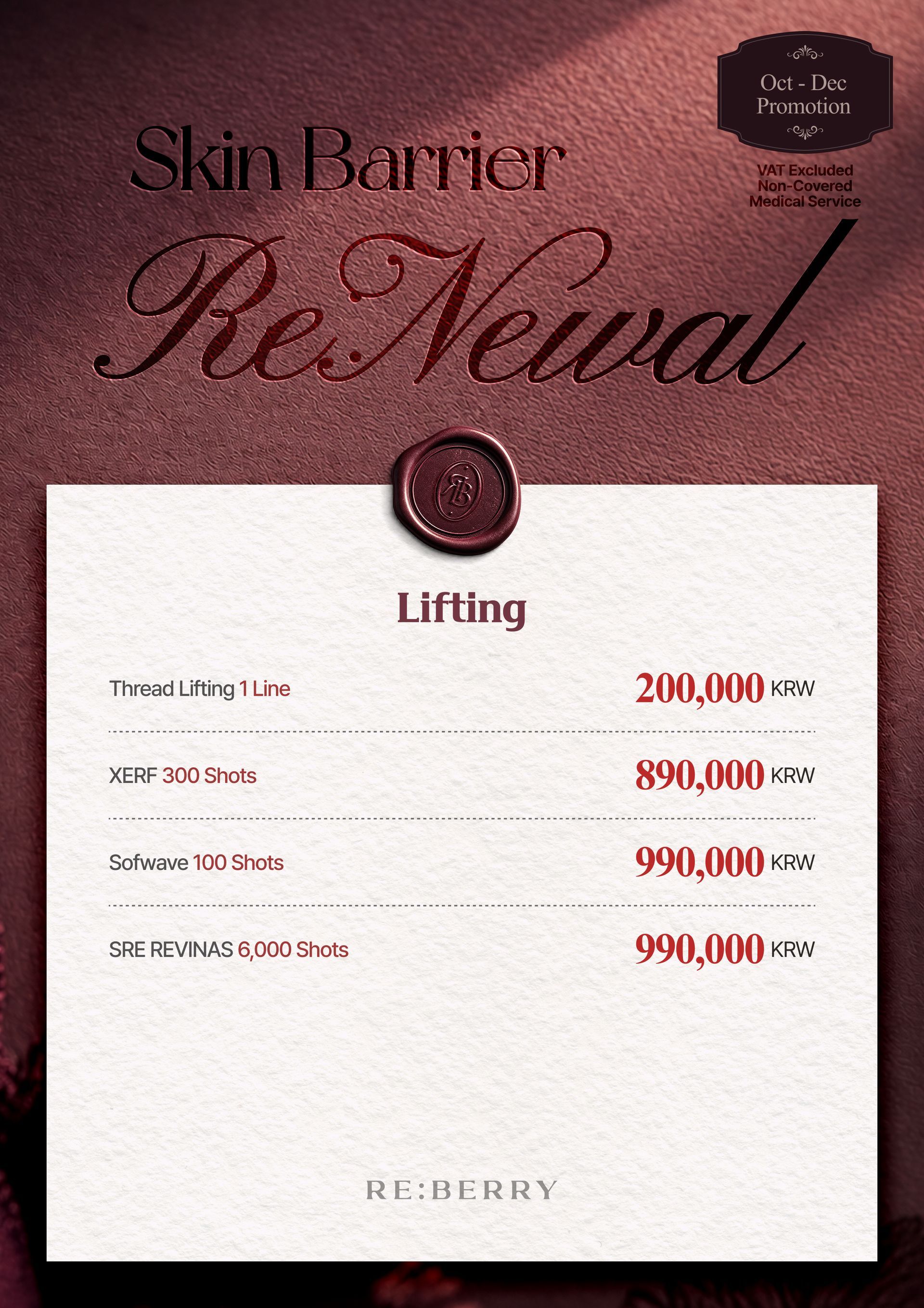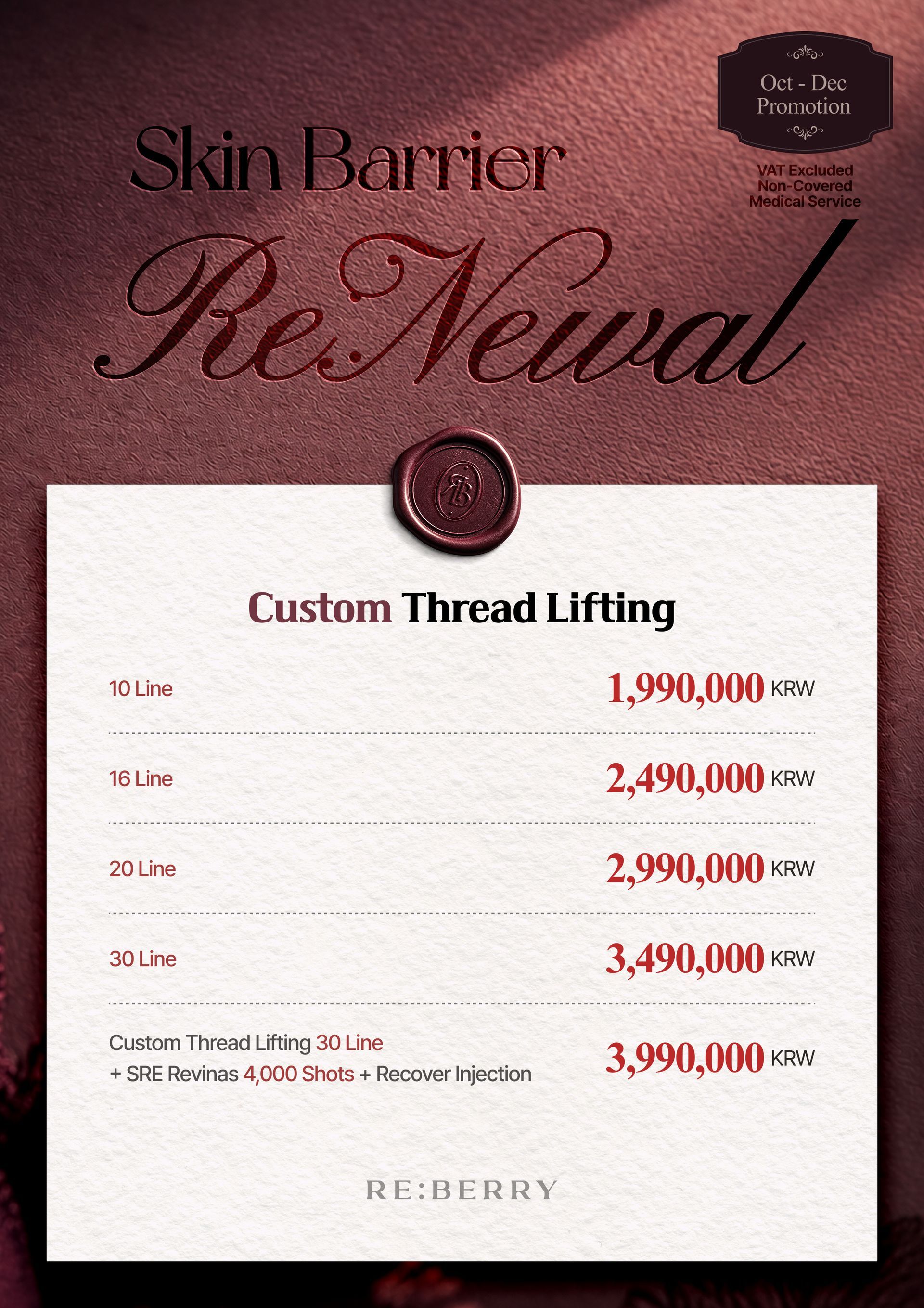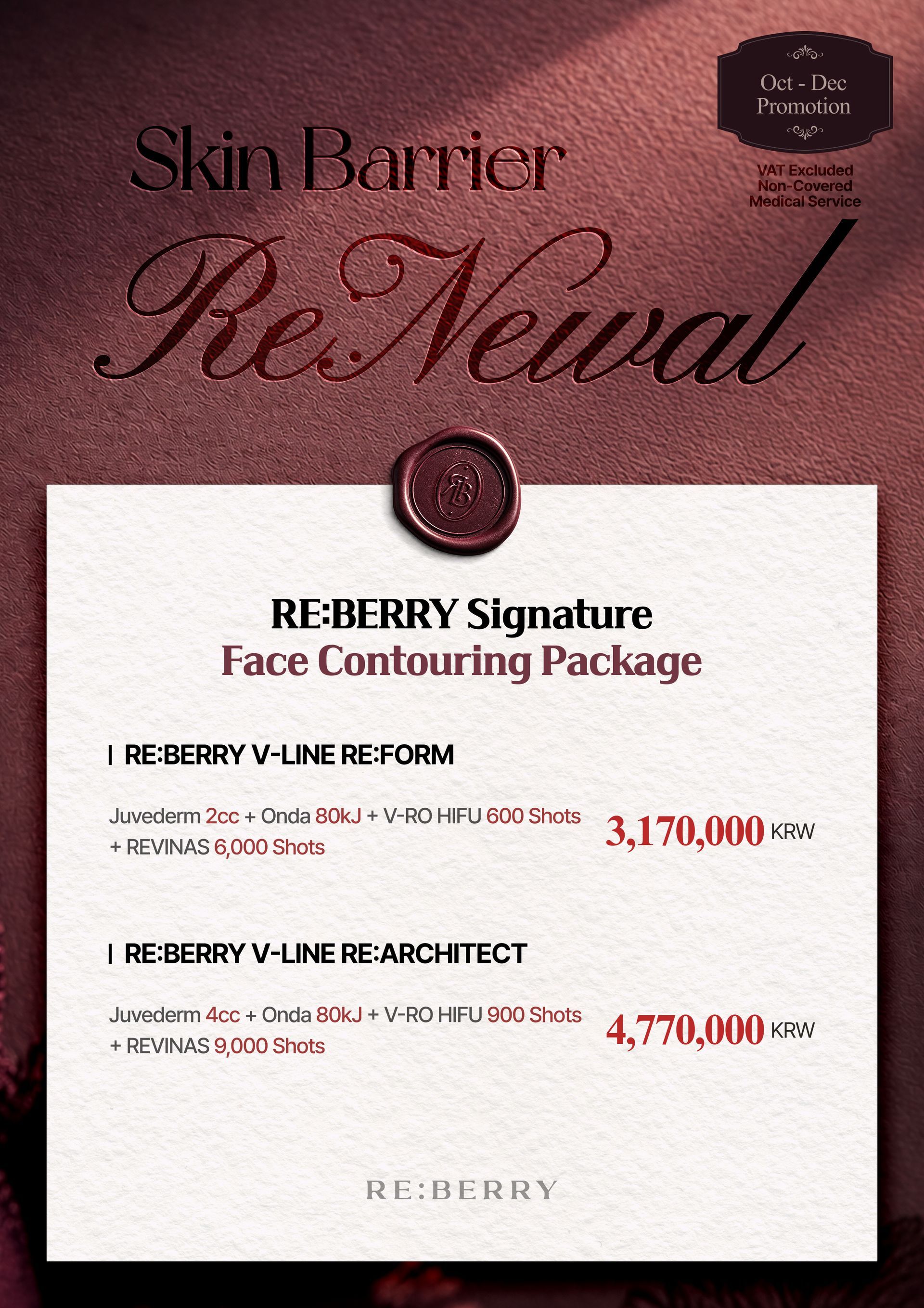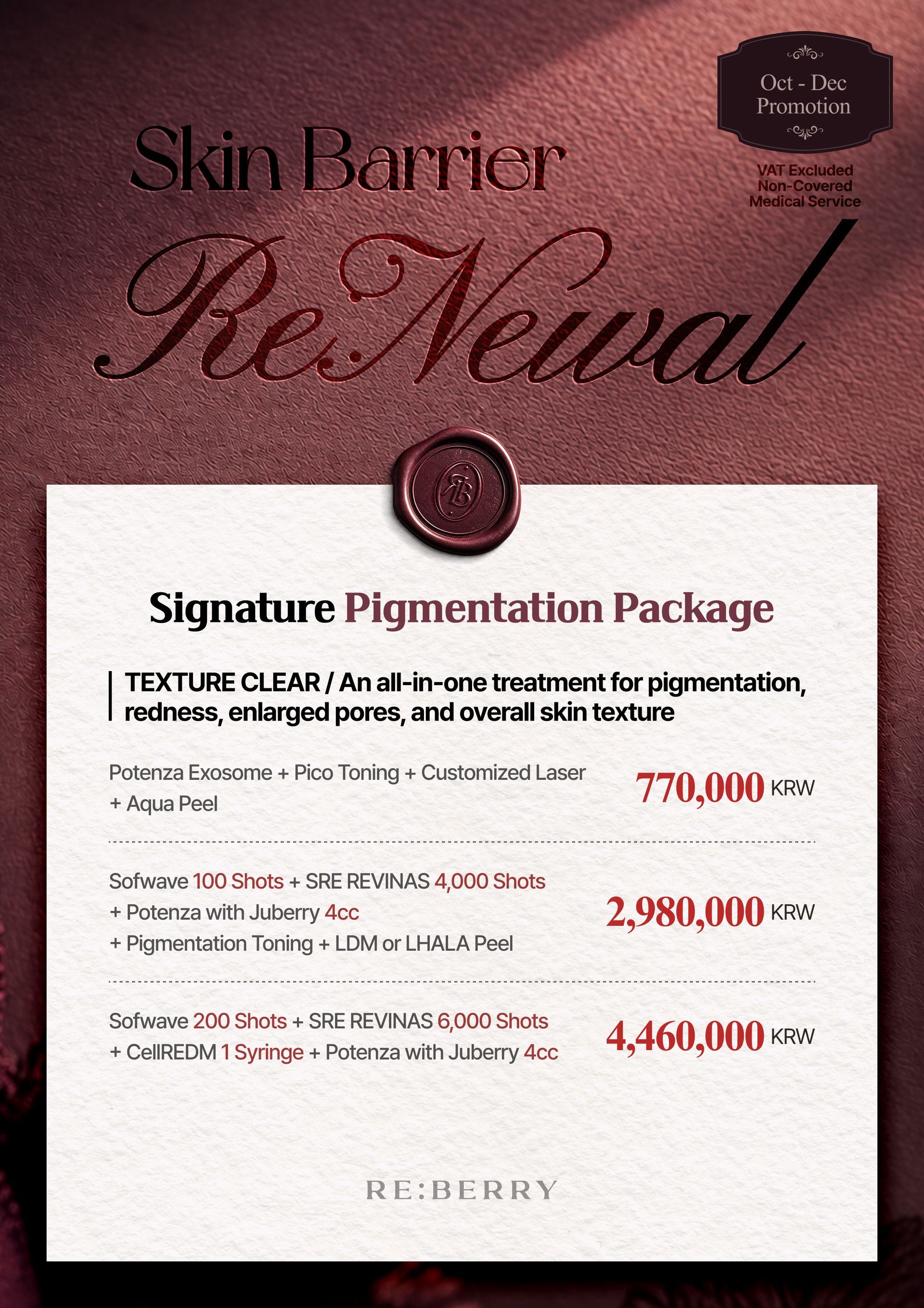
Nose Thread Lift in Seoul, Korea
Gangnam Re:berry Clinic
Nose Thread Lift in Seoul, Korea
Non-Surgical Nose Enhancement at RE:BERRY Clinic Gangnam
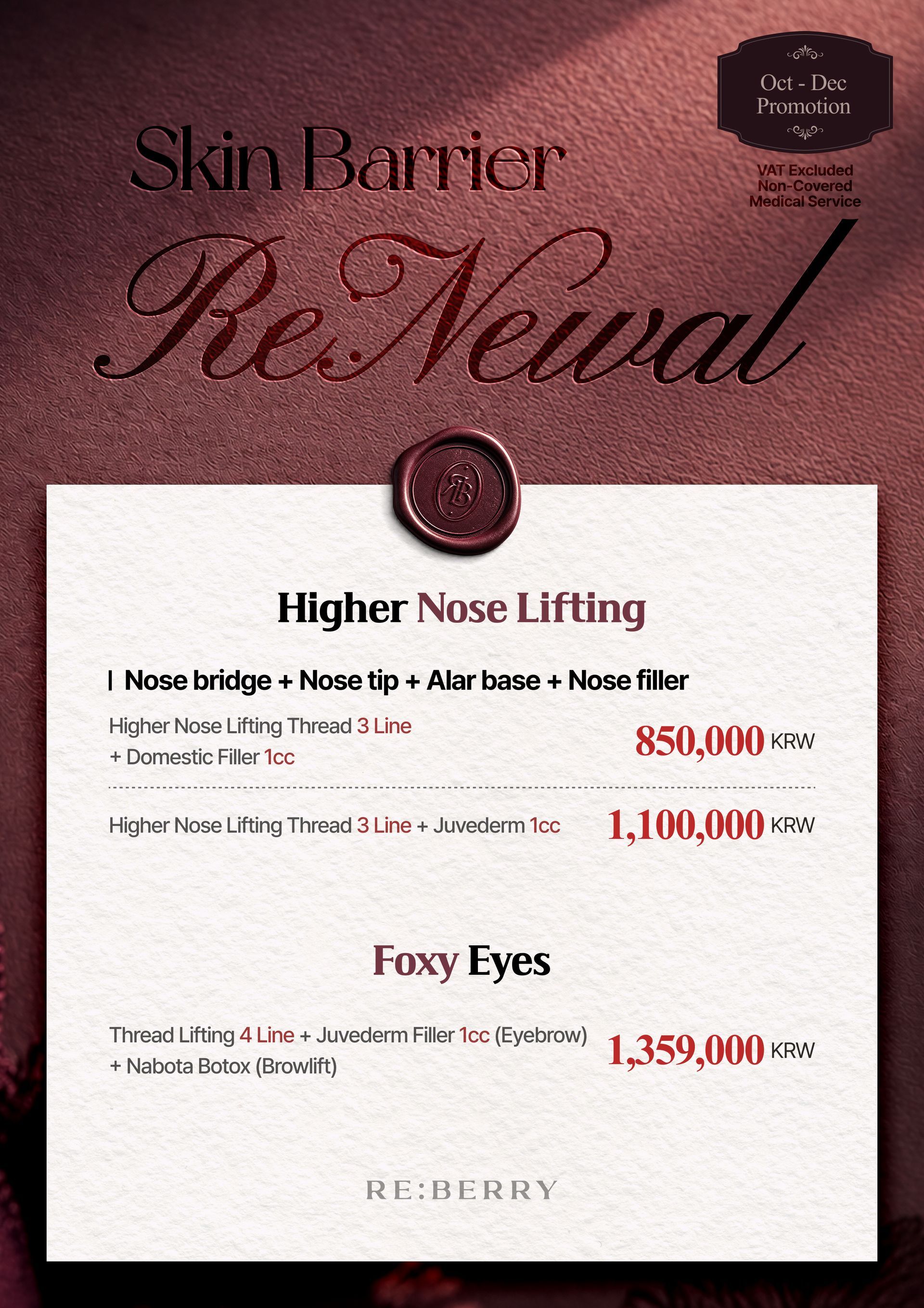
Nose Thread Lift is a minimally invasive procedure designed to enhance nose height, definition, and contour without surgery. By inserting specialized dissolvable threads, this treatment can lift the nasal bridge and refine the tip for a sharper, more balanced profile.
At RE:BERRY Clinic Gangnam, Nose Thread Lift procedures are customized to complement each patient’s facial proportions while maintaining a natural appearance.
What Is Nose Thread Lift?
Nose Thread Lift uses medical-grade dissolvable threads (such as PDO) inserted along the nasal bridge and tip to create structural support and subtle elevation. Over time, the threads stimulate collagen production, helping maintain improved definition even as they dissolve.
At RE:BERRY Clinic, Nose Thread Lift is recommended for:
✔ Low or flat nasal bridge
✔ Mildly drooping nasal tip
✔ Desire for higher nose profile without surgery
✔ Patients seeking temporary or non-surgical enhancement
✔ Individuals not ready for rhinoplasty
The procedure enhances projection and contour without implants or bone alteration.
Why Choose Nose Thread Lift in Gangnam?
Gangnam is known for precision aesthetic procedures and advanced facial contouring techniques. At RE:BERRY Clinic Gangnam, thread placement, height adjustment, and nasal balance are carefully designed based on individual facial structure.
The clinic offers:
- Premium medical-grade dissolvable threads
- Customized nose design consultation
- Minimally invasive technique
- Combination options with fillers for refined contour
- Foreigner-friendly service for international patients
Each treatment focuses on achieving natural, proportionate enhancement.
Benefits of Nose Thread Lift
Nose Thread Lift at RE:BERRY Clinic helps:
✔ Increase nasal bridge height
✔ Lift and refine nasal tip
✔ Improve side profile definition
✔ Stimulate collagen support
✔ Avoid surgical downtime
✔ Deliver immediate yet natural results
Results are visible immediately and typically last 12–18 months depending on individual metabolism and lifestyle.
What to Expect During Treatment
A typical Nose Thread Lift session includes:
Treatment time: Approximately 20–40 minutes
Procedure:
- Nasal structure consultation and design planning
- Local anesthesia
- Precise insertion of threads
- Post-treatment care instructions
Recovery:
- Mild swelling or bruising for a few days
- Avoid heavy pressure on the nose for 1–2 weeks
- Minimal downtime
- Final contour stabilizes within several weeks
Nose Thread Lift at RE:BERRY Clinic Gangnam
At RE:BERRY Clinic, Nose Thread Lift is designed to enhance nasal definition safely and naturally without surgery. Each procedure is tailored to create balanced facial harmony and refined contour improvement.
Whether you are visiting Seoul or living in Korea, RE:BERRY Clinic provides a premium, foreigner-friendly Nose Thread Lift experience in Gangnam.
📍 RE:BERRY Clinic Gangnam, Seoul
💌 Book your consultation for personalized Nose Thread Lift treatment