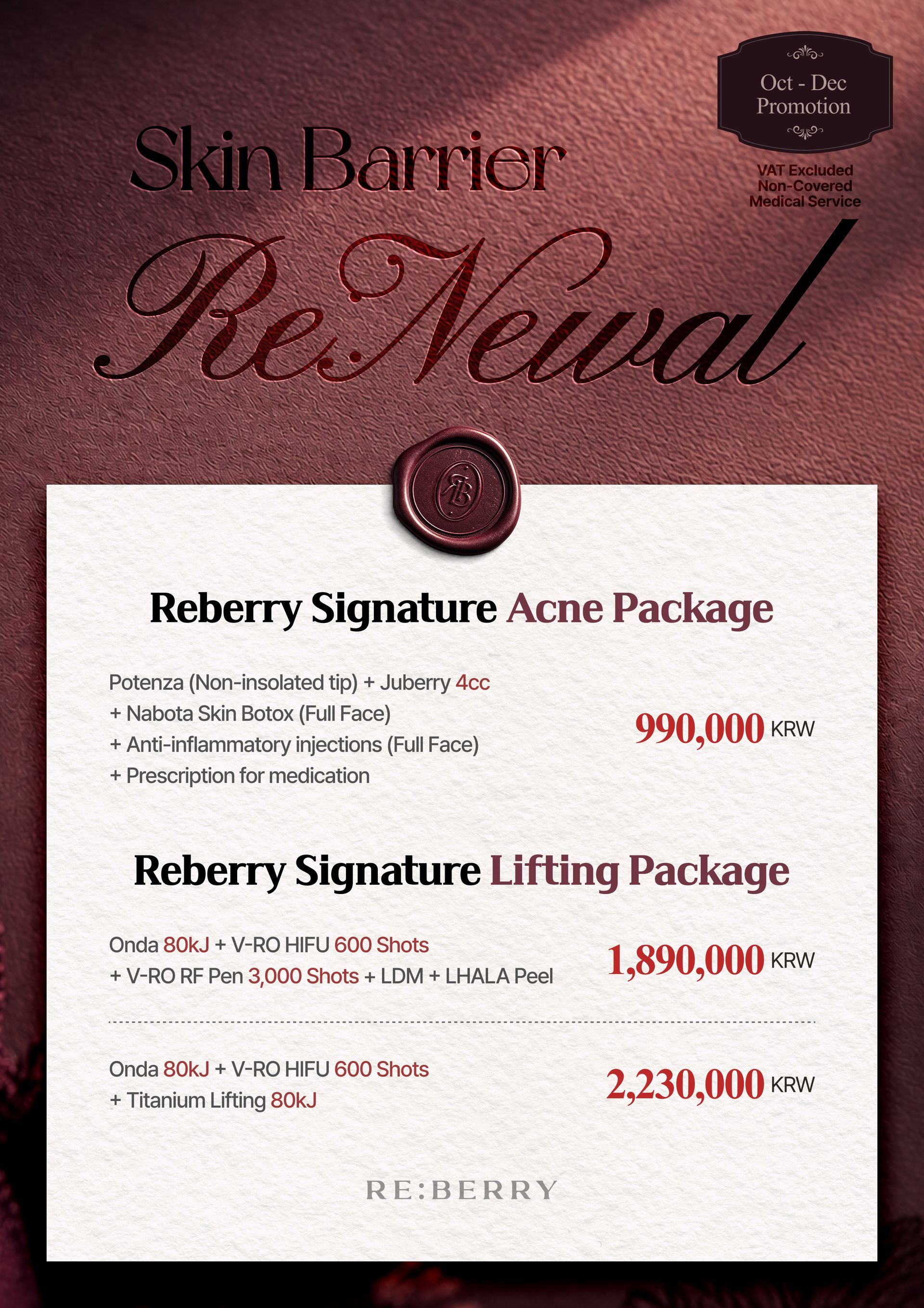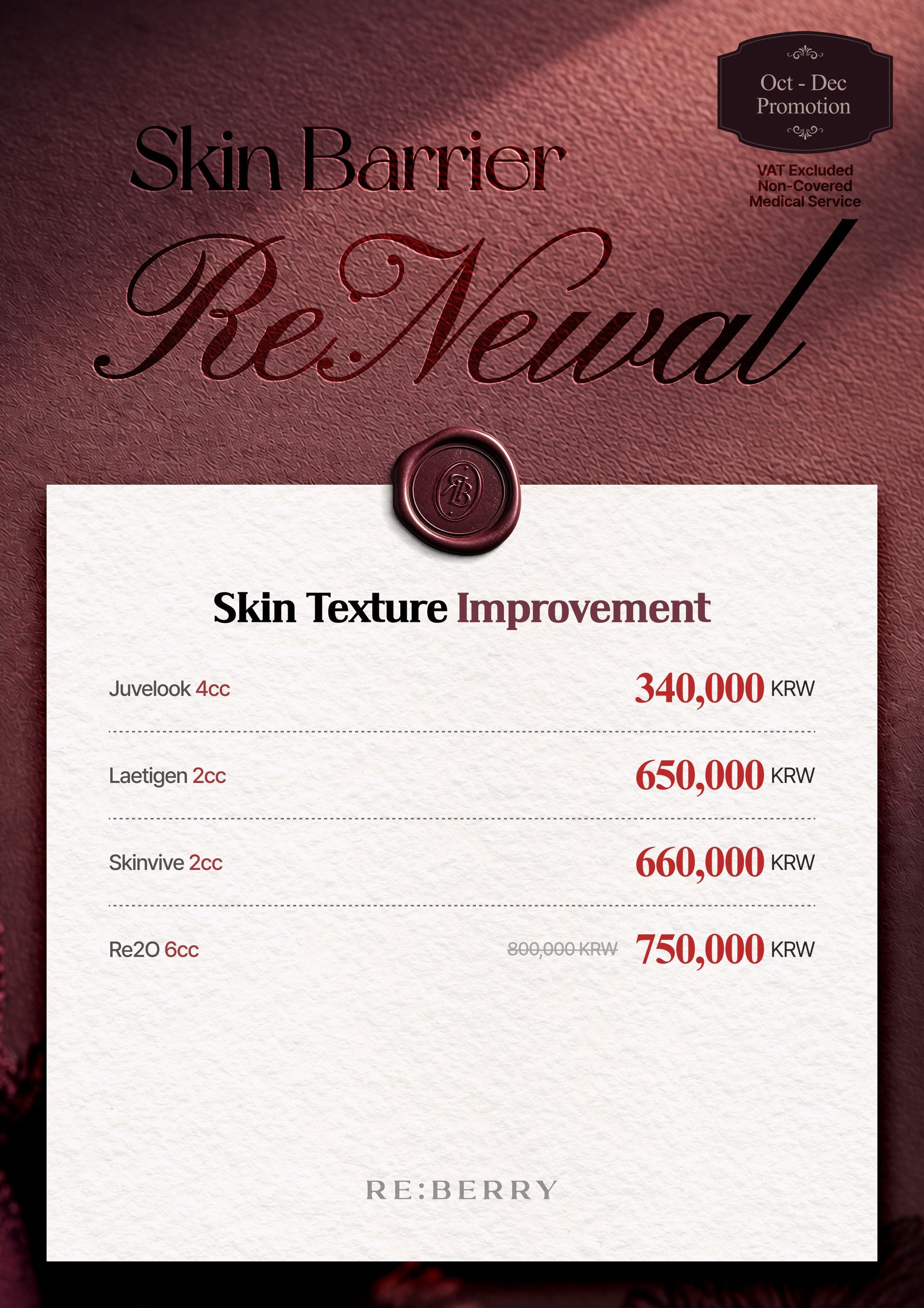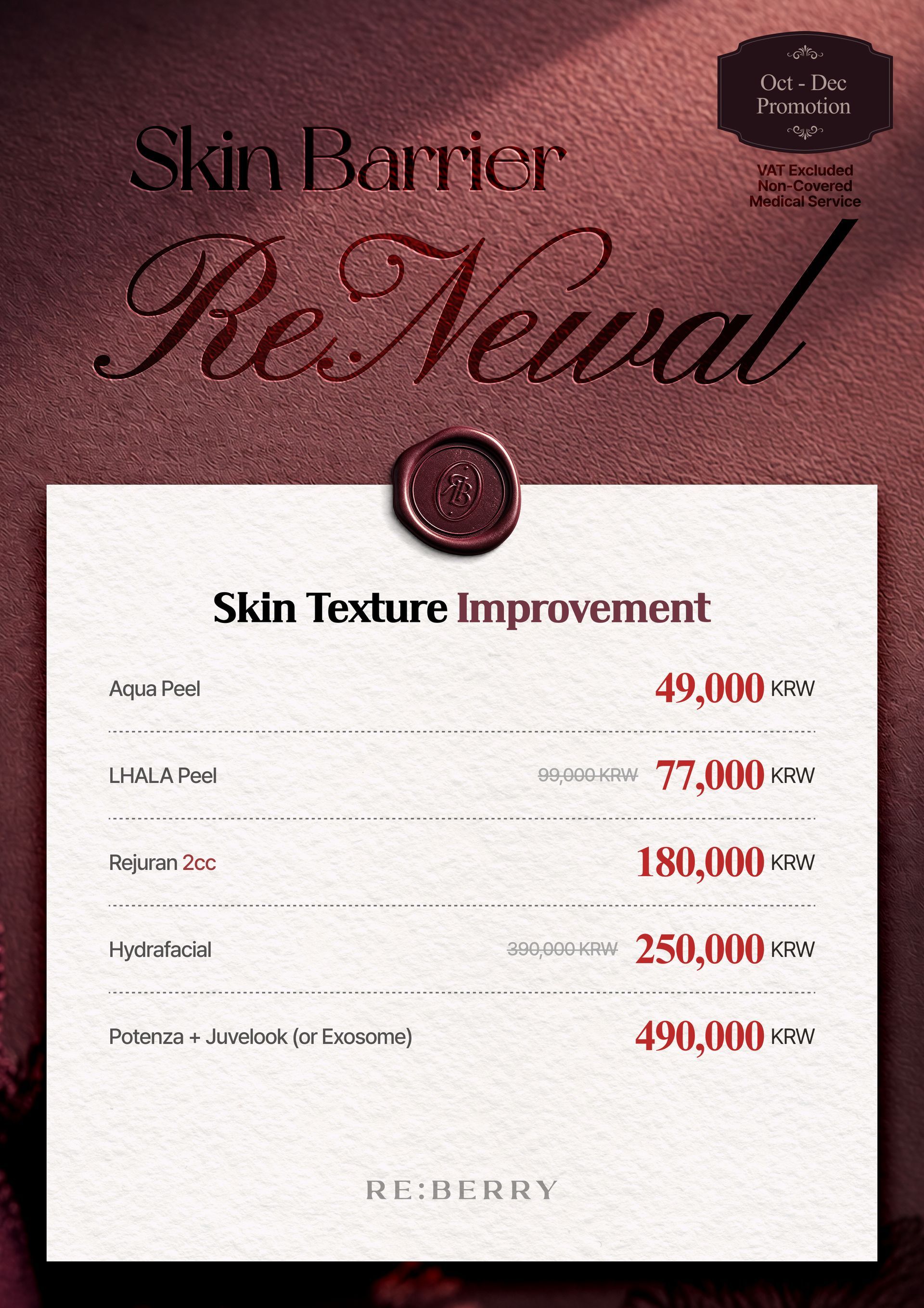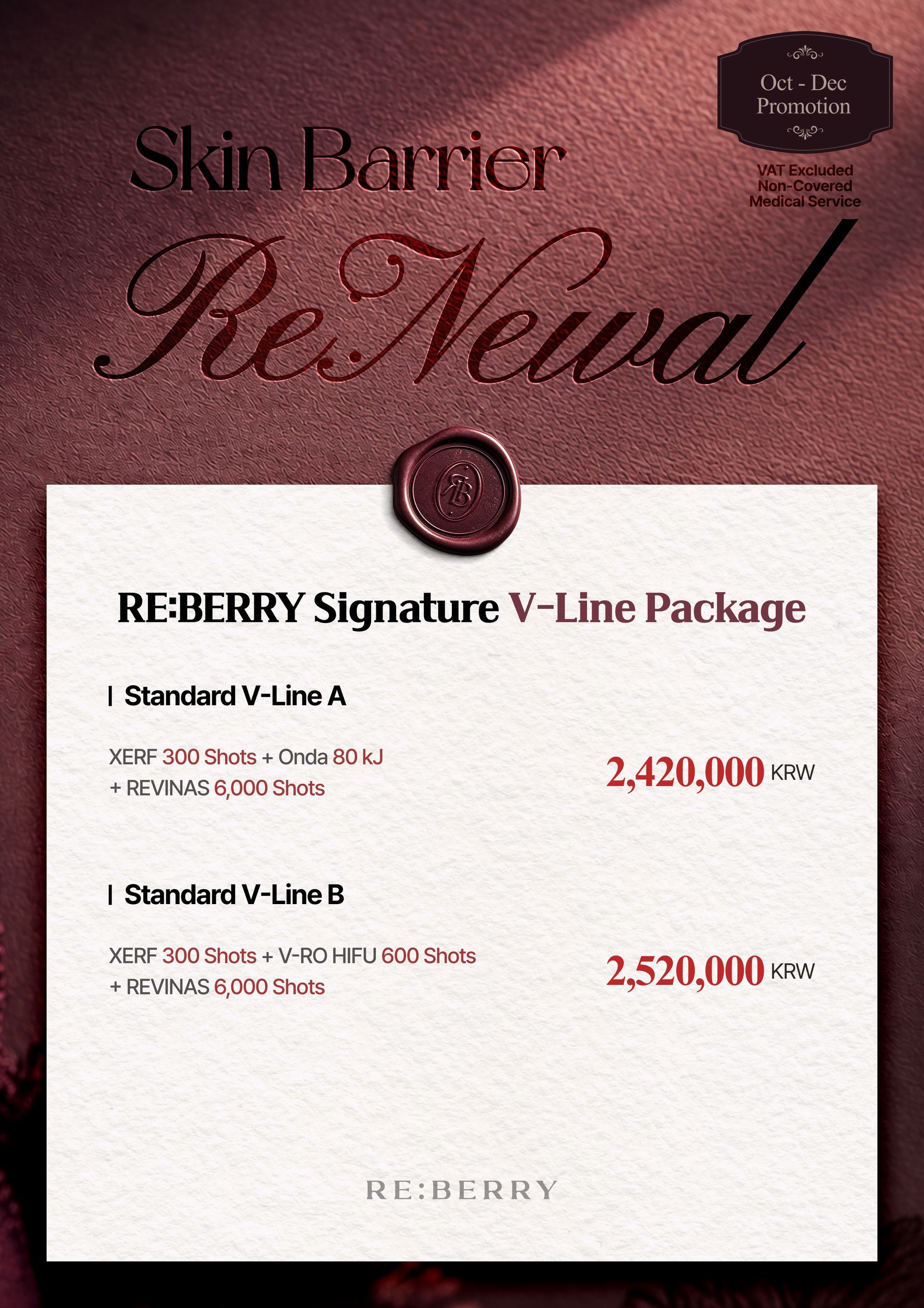
Scar Removal in Seoul, Korea
Gangnam Re:berry Clinic
Scar Removal in Seoul, Korea
Advanced Scar Treatment at RE:BERRY Clinic Gangnam
Scar Removal treatments are designed to significantly reduce the visibility of scars by improving skin texture, tone, and overall smoothness. While complete removal may not always be possible, modern dermatologic techniques can dramatically soften scars and restore a more even skin appearance.
At RE:BERRY Clinic Gangnam, scar treatments are carefully customized depending on scar type, depth, pigmentation, and skin condition to achieve safe and natural-looking results.
Why Choose Scar Removal in Gangnam?
Gangnam is recognized for advanced laser technology and precision aesthetic procedures. At RE:BERRY Clinic Gangnam, scar removal plans are developed after detailed skin analysis and medical consultation.
The clinic provides:
- Fractional laser resurfacing for texture refinement
- RF microneedling for collagen stimulation
- Subcision for depressed acne scars
- Steroid injections for raised scars
- Combination therapies for enhanced results
- Foreigner-friendly consultation services
What Types of Scars Can Be Treated?
Scar Removal treatments can address:
✔ Acne scars (ice pick, boxcar, rolling types)
✔ Surgical scars
✔ Injury or trauma scars
✔ Burn scars
✔ Hypertrophic and keloid scars
✔ Pigmented or discolored scars
Because scars vary in formation and severity, multiple sessions are typically required. Improvement continues gradually as collagen remodeling progresses.
What to Expect During Treatment
Treatment time: 20–60 minutes depending on method
Anesthesia: Topical numbing cream or local anesthesia
Downtime: Redness, mild swelling, or peeling depending on procedure
Recovery: A few days to one week for most laser treatments
Results: Progressive improvement over several weeks to months
Consistent sun protection and proper aftercare are essential for optimal healing and long-term results.
Scar Removal at RE:BERRY Clinic Gangnam
At RE:BERRY Clinic, experienced medical professionals evaluate scar depth, skin type, and healing patterns to design a personalized scar improvement plan. The goal is to achieve smoother skin texture while maintaining overall skin health and safety.
If you are looking for professional scar treatment in Seoul, Scar Removal at RE:BERRY Clinic offers a customized and medically guided solution in Gangnam.
📍 RE:BERRY Clinic Gangnam, Seoul
💌 Schedule your personalized Scar Removal consultation today