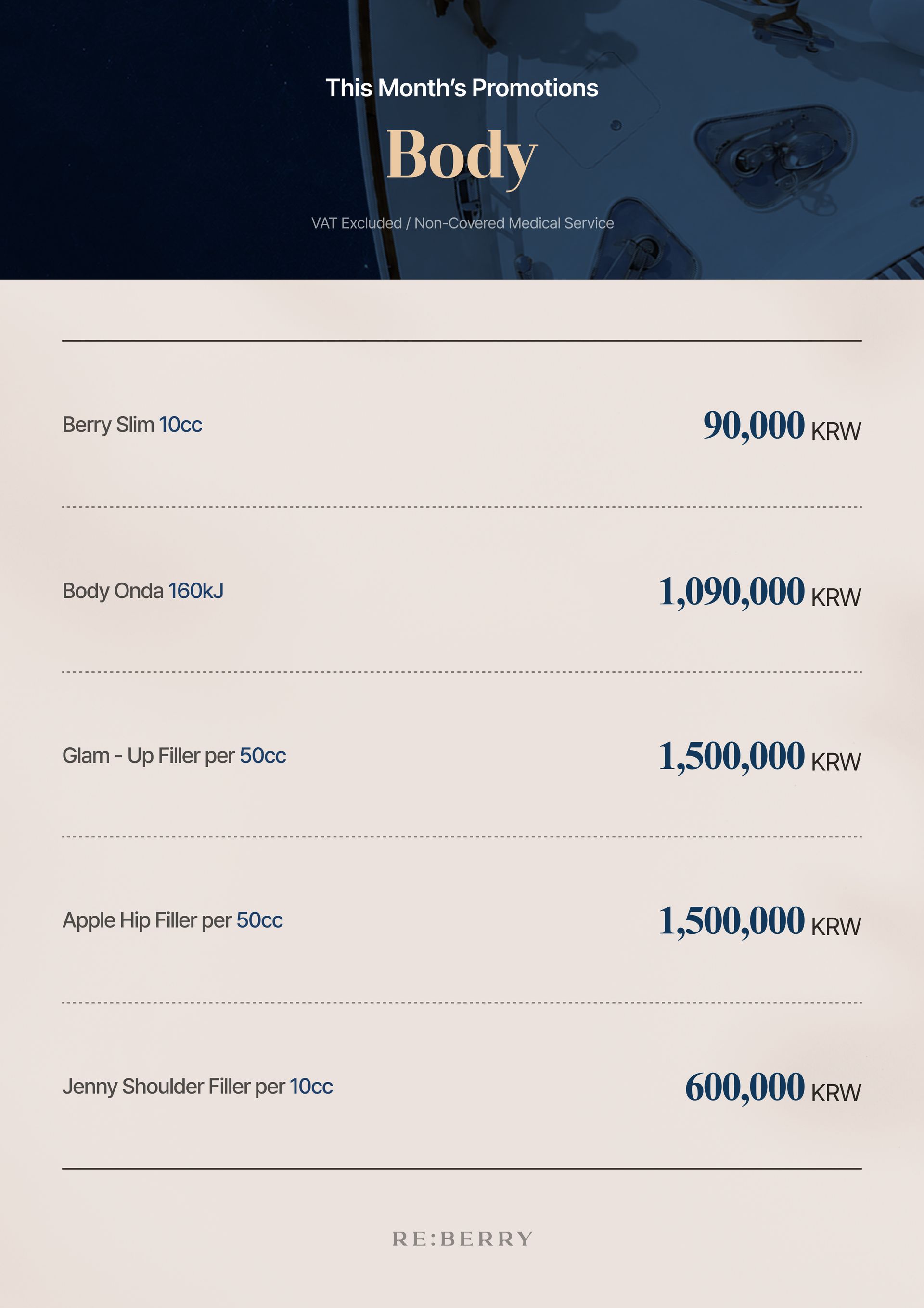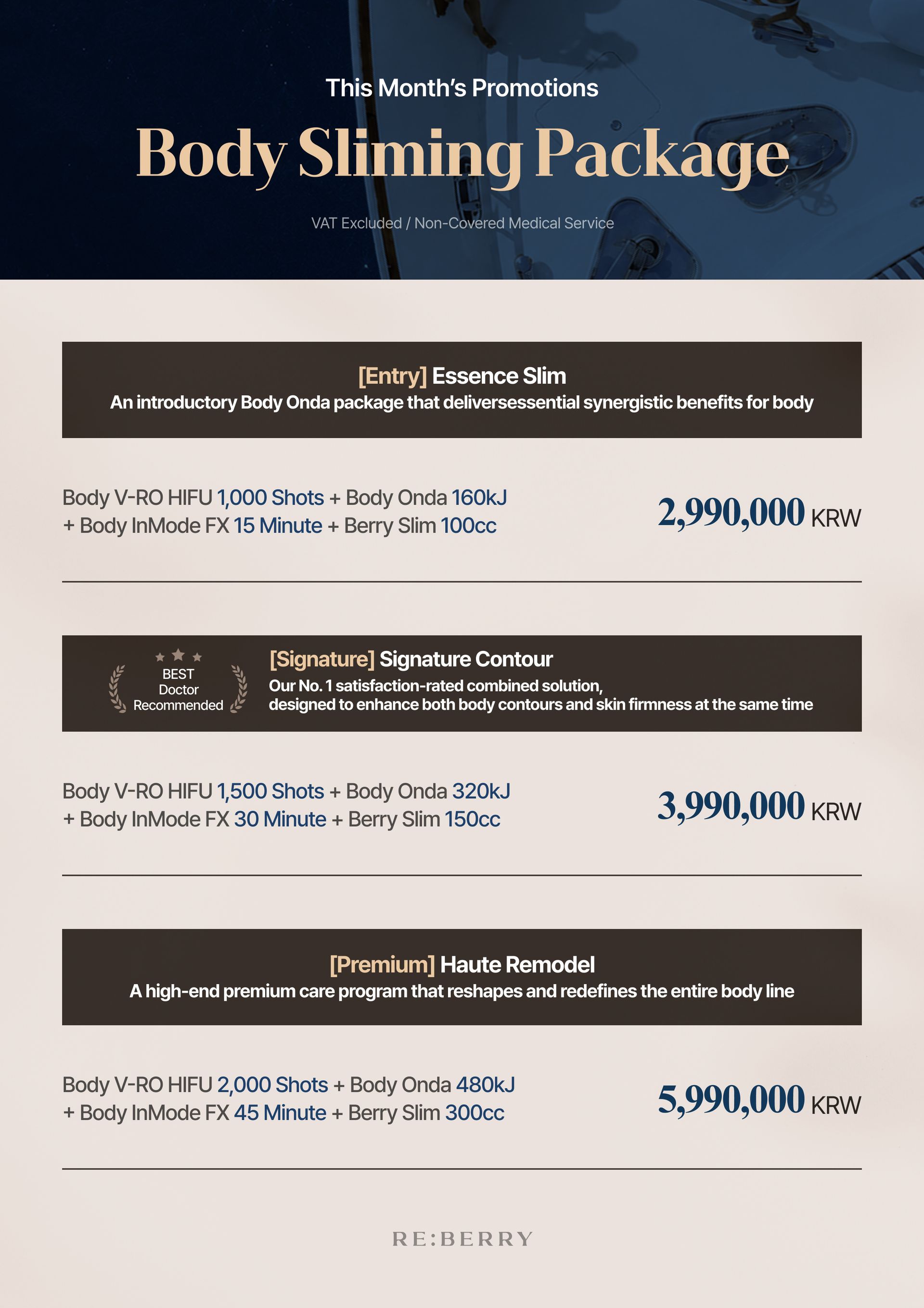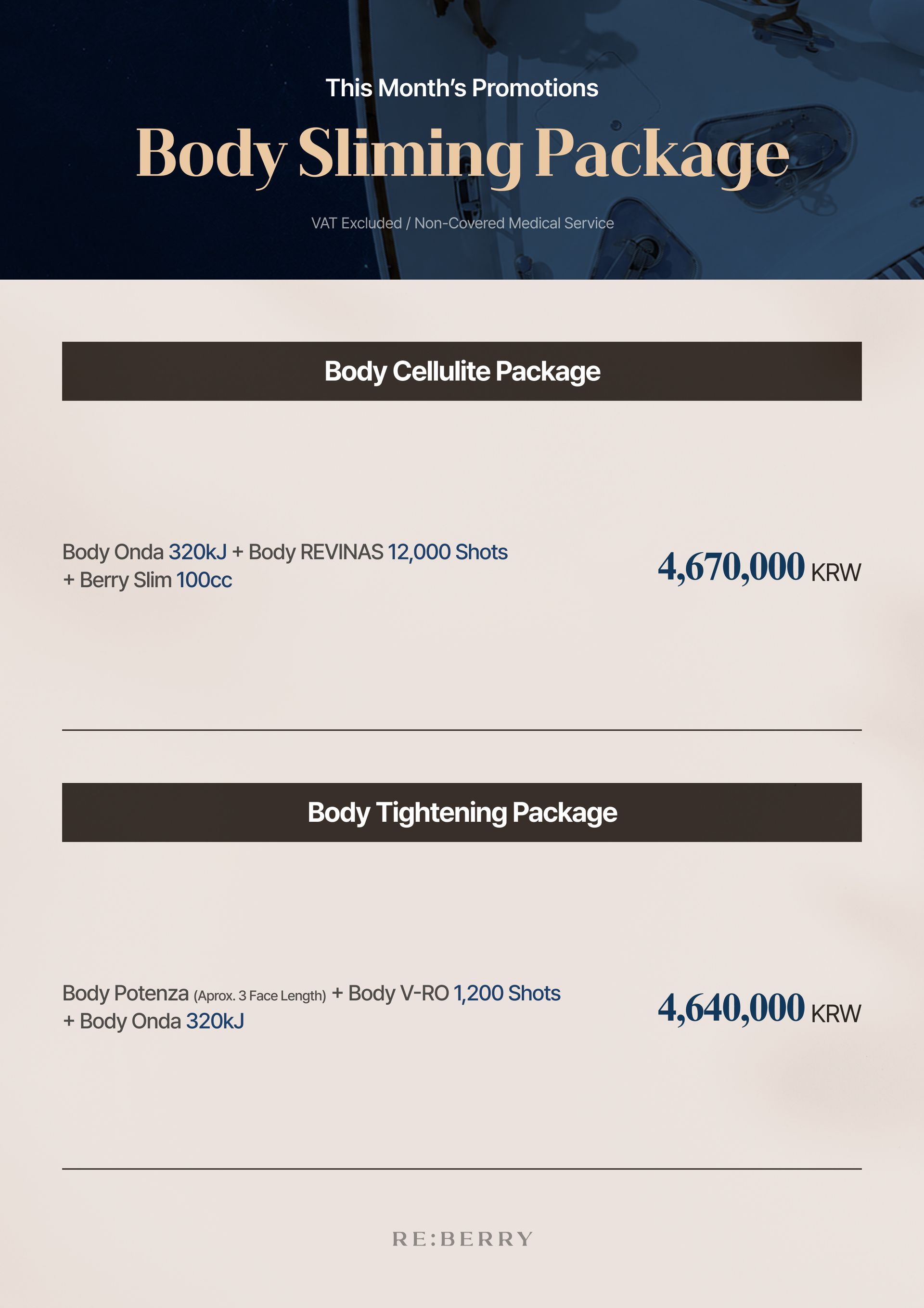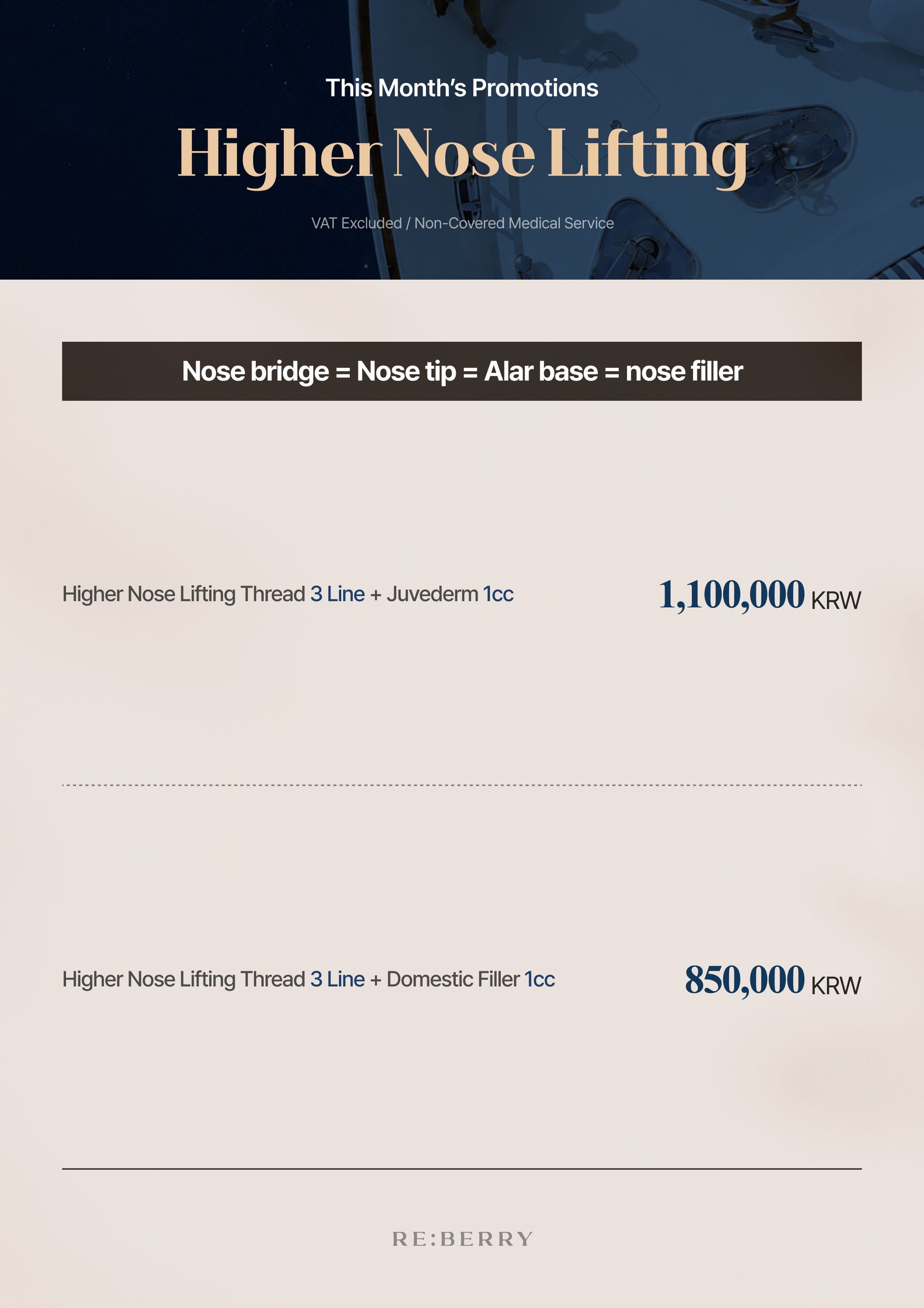
Waist fat injections in Seoul, Korea
Gangnam Re:berry Clinic
Waist Fat Injections in Seoul, Korea
Non-Surgical Waist Contouring at RE:BERRY Clinic Gangnam
Waist Fat Injections are a minimally invasive treatment designed to reduce localized fat around the waist and enhance body contours. By dissolving fat deposits in targeted areas, this treatment helps create a slimmer, more defined waistline without surgery.
At RE:BERRY Clinic Gangnam, Waist Fat Injections are customized based on the patient’s waist shape, fat distribution, and aesthetic goals for safe, effective, and natural-looking results.
What Are Waist Fat Injections?
Waist Fat Injections use a specialized solution to break down subcutaneous fat, which the body then naturally metabolizes over time.
This treatment is recommended for:
✔ Localized waist fat resistant to diet and exercise
✔ Desire for non-surgical body contouring
✔ Patients seeking a slimmer, more proportionate waistline
✔ Combination with skin tightening treatments for enhanced results
Unlike liposuction, Waist Fat Injections are minimally invasive with minimal downtime.
Why Choose Waist Fat Injections in Gangnam?
Gangnam is recognized for advanced aesthetic procedures and precise body contouring. At RE:BERRY Clinic Gangnam, each injection session is tailored to patient anatomy and desired waist shape.
The clinic offers:
- Targeted fat reduction for a natural waist contour
- Combination with RF, Ultherapy, or other skin-tightening therapies
- Experienced dermatologists specializing in body sculpting
- Safe, minimally invasive procedures
- Foreigner-friendly service for international patients
This ensures effective waist slimming while maintaining natural proportions.
Benefits of Waist Fat Injections
Waist Fat Injections at RE:BERRY Clinic help:
✔ Reduce localized waist fat
✔ Improve waistline contours and definition
✔ Achieve a slimmer, more proportionate figure
✔ Minimize risk compared to surgical procedures
✔ Gradual, natural-looking results
✔ Support long-term body contour goals
Multiple sessions may be recommended depending on the amount of fat and patient goals.
What to Expect During Treatment
A typical Waist Fat Injection session includes:
Treatment time: 20–40 minutes
Procedure:
- Consultation and waist assessment
- Numbing cream applied if needed
- Targeted injections into localized fat areas
- Post-treatment soothing care
Recovery:
- Mild swelling, redness, or tenderness may occur
- Avoid strenuous waist or abdominal activity for a few days
- Visible improvement typically develops over 4–6 weeks
- Follow-up sessions may be required for optimal results
Waist Fat Injections at RE:BERRY Clinic Gangnam
At RE:BERRY Clinic, Waist Fat Injections are performed with precision to safely reduce localized fat and enhance waist contours, helping patients achieve a slimmer, more defined midsection.
Whether you are visiting Seoul or living in Korea, RE:BERRY Clinic provides a premium, foreigner-friendly waist slimming treatment experience in Gangnam.
📍 RE:BERRY Clinic Gangnam, Seoul
💌 Book your consultation for personalized Waist Fat Injection treatment